
Here’s the call nobody wants. It’s your daughter’s voice, crying, saying she’s been in an accident and needs money right now. Please don’t tell Dad. It sounds exactly like her.
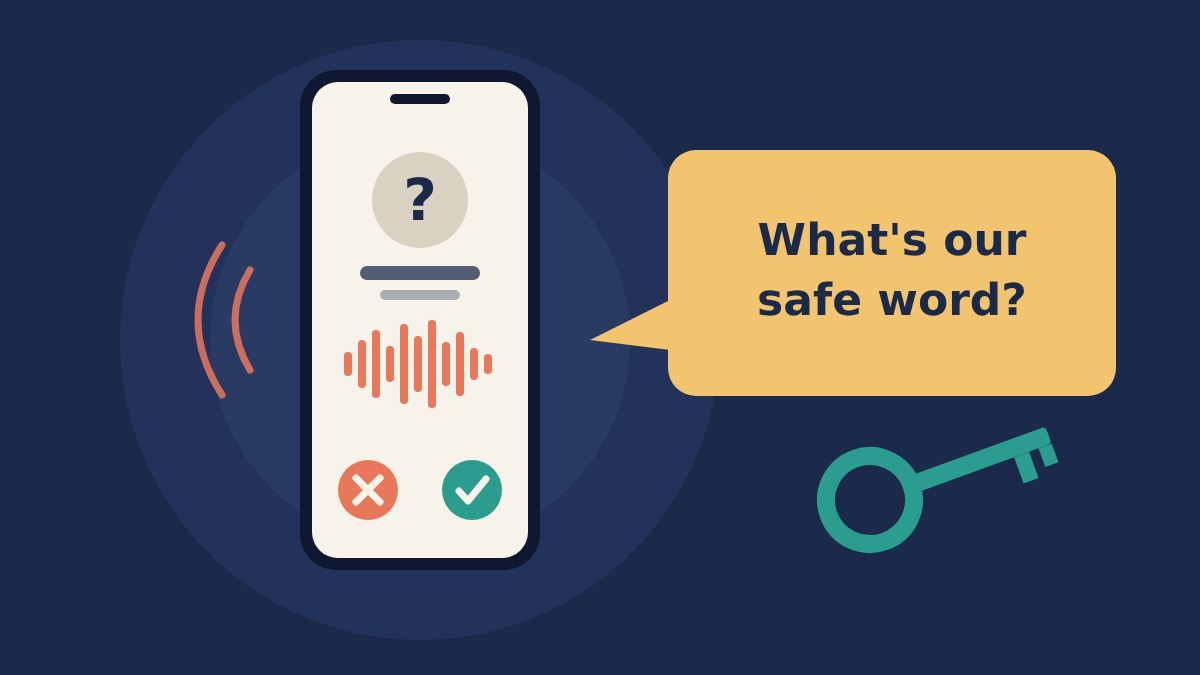
It might not be her. Scammers can now copy a voice from public recordings, such as a video on social media, and use it to impersonate someone you love. The FBI warned about this in a public service announcement in December 2024, and its first suggestion is wonderfully low-tech: pick a secret word.
How the call usually works
- A call or voice message arrives from someone who sounds like a family member, a friend or a boss.
- They’re in trouble and it’s urgent: an accident, an arrest, a lost wallet abroad.
- They want money fast, by wire, gift cards, crypto or a courier who will pick up cash.
- They ask you not to tell anyone, and often insist you stay on the line. That part is deliberate. Secrecy and an open line keep you from calling the real person to check.
The number on your screen can be faked too, so caller ID proves nothing.
The one-minute defense: a family safe word
This is your family’s password, and it works the same way a good password does.
- Pick something nobody could guess or look up. Not a pet’s name, a street, a school or a team. Two or three unrelated words work well.
- Share it in person or on a call, not by text or email. Anything typed into a message can be read by someone else.
- Make the rule simple. Anyone who calls asking for money or urgent help has to say the word first. If they can’t, you hang up.
- Include everyone. Grandparents are targeted most often, and kids old enough to answer a phone need to know too.
- Change it if it leaks, and once a year anyway.
A real person in a real emergency may panic and forget it. That’s fine. Use the backup plan below.
The backup plan
- Hang up and call back using the number saved in your contacts, not one the caller gives you, even if they beg you to stay on the line.
- Ask a question only they would know, one that can’t be answered from their social media. Good: “What do I call you when nobody else is around?” or “What did we argue about this week?” Bad: their birthday, school, pet’s name or anything they’ve ever posted.
- Call someone else in the family to confirm the story.
- Slow down. Urgency, secrecy and unusual payment methods are the three red flags, and they’re the same ones in our guide to the three common scams.
Make yourself a smaller target
The FBI’s alert also suggests limiting how much of your voice and image is public. Realistically you can’t scrub the internet, but you can set social accounts to private and limit followers to people you know. Consider a generic voicemail greeting too.
If you think you’ve been scammed
Contact your bank right away, since speed matters for wire transfers. Then report it to the FBI’s Internet Crime Complaint Center at ic3.gov and the FTC at ReportFraud.ftc.gov.
Finally, send this to your parents. Then call them and agree on a password.